

How Much Room Do You Have For a Small Wood Burning Stove?
Wood stoves are adored by many people due to their warm atmosphere and the process of building the fire. However, there are some considerations you should keep in mind when choosing the ideal small wood burning stove for your space.
For example, you might want to make sure that your flue pipes can exit straight up through the portion of the roof that is directly above it.
How much space do you have around your stove?
It is important to think about the space available around a wood stove when shopping. You'll need an amount of space to ensure that the stove meets safety regulations and is properly installed in your home. The first step in determining the amount of space you have is measuring the space you would like to put your stove. Use a tape measure to precisely measure the space. Make sure to take into account the thickness of your counters and any other surfaces that extend over the cutout of your stove. Also, you should measure the distance from the bottom of your cabinets to the floor, if you need to.
Once you've a good idea of how much room you have, you can begin narrowing down your options. Begin by evaluating your stove requirements and budget. If you're on an affordable budget, think about buying a used or second-hand stove that offers great value for your money. Compare the Btu specs of each stove model before you purchase a new one to find the perfect one for your space.
A stove with a high Btu rating is more efficient and will generate more heat for your home. This will save you money and energy in the long term.
In addition to the comparison of Btu ratings Additionally, you should take into consideration the size of your house and the climate. If you live in a region with cold winters you will require a stove that has the capacity to produce a lot of heat to warm your home. If you're in a region that experiences milder winters, then a stove that has a lower power output might be adequate.
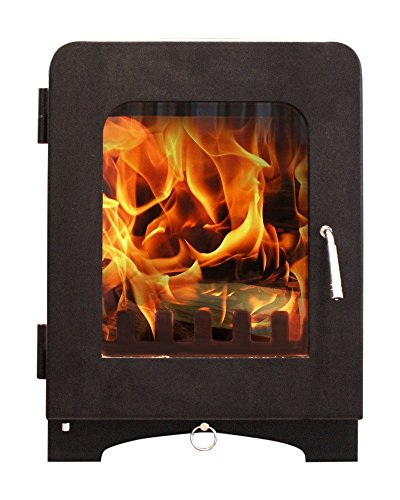
Look into a model from Navigator Stove Works if you are in search of a small, wood-burning stove that can be easily customized to meet your requirements. The Little Cod wood burning stove is a compact and durable stove that comes equipped with a number of features. The Little Cod wood stove is equipped with brass gallery options that lets you hang pots or pans on the stove. It also comes with an stainless-steel cooktop that enhances cooking on the stove. Additionally the Little Cod can be fitted with a direct air intake to improve its effectiveness.
How Do You Want Your Flu System to Work?
Wood stoves are a great method of heating your home, however they can be a bit confusing to operate. It is essential to be aware of how to maintain an effective fire and understand how the stove works in order to get the most out of it. The best way to do this is to read the stove's owner's manual or talking to an experienced heating engineer.
The main components of a wood-burning stove are the firebox and chimney. The firebox covers the fire and protects it from the elements. The firebox is insulated and comes with air vents to control the combustion air's flow. The stove is equipped with a glass door that lets the user see the fire.
Stoves use wood that is seasoned as their primary fuel source. The wood that is seasoned is low in moisture and dry, which helps it burn more efficiently. The firewood is supplied by the air vents of the stove located on the top and lower ends of the firebox. The amount of air flow through the air vents is controlled by the stove's thermostatic control system, which uses the bimetal helix. The bimetal helix coil is made of two different metals, that expand at different rates when heated. This creates a controlled airflow which is then used to heat the fuel in the firebox.
It is essential to add a small amount of wood every when the fire starts to ensure a steady fire and stop it from burning out. A fire that burns out creates a dark, odorous smoke, which isn't efficient. The smokier the fire, the more energy is wasted in the production of heat and the more creosote that will accumulate in the flue pipe.
Smoke Control Areas are found in the majority of cities and towns. This means that wood stove emissions must be kept at the minimum. It is crucial to match the size of your stove to the heating requirements of your home in order to ensure that the emissions remain within acceptable limits. A larger stove can generate a lot more heat. However, if the stove is too large for the space you live in, it may cause the flames to be unevenly burning or emit uncontrolled smoke.
How Far Do You Need to place your stove away from the combustible Surfaces?
Stoves shouldn't be positioned close to combustible substances because the fire could produce extremely hot gases. This is why there are regulations and guidelines that stoves must adhere to so that they can be safe to use. The most important of these are the distances that you must maintain between your stove and any combustible material.
The exact distances differ based on the stove, but the minimum distances are set by the manufacturer in their installation instructions (contact the manufacturer if they do not have their installation instructions), or in Approved Document J (Building Regulations) (contact your local building inspector for more details). It is also worth noting that your wood burning stove should be placed on a hearth and that you must utilize the floor protection that is stipulated by the manufacturer of the stove.
Most times it will be a layer of gypsum plaster over the slab or base of concrete. However, some stoves could require more elaborate floor protection, as the specific specifications will depend on the amount of heat radiating downwards from the stove. Some stoves listed will not require any combustibles beneath they and will only require a 1/4" ceramic tile.
Many stoves come with a manufacturer's supplied heat shield which reduces the distance to combustibles even further. It is possible to do this along the entire length of a chimney pipe. It is worthwhile looking into whether this option is available.
You can also decrease the clearance requirement by covering the wall with a sheet made of metal, like aluminum. This will allow you to maintain the same distance from the flue pipes, however it's more expensive and you'll be required to verify whether the material is compatible with the requirements of your particular stove.
Another alternative is to frame an masonry brick wall of 3.5 inches thick in wall combustible and finish it off with a layer of hardiebacker or fireproof cladding. This will reduce the minimum required clearance to just six inches. You can also install internal double-wall stovepipes, manufactured by the same manufacturers as double-wall chimneys of class A, to further reduce the clearance required.
How far away from non-combustible surfaces must you place your stove?
Stoves produce a lot of heat which can cause damage to surfaces that are not shielded from it. It is essential to know the distance you can set your stove from surfaces that are flammable and utilize this information when you are preparing the space surrounding it for its installation.
All stoves that burn wood whether they are listed or not require protection for the floor known as a hearth. It could be non-combustible stones or even ceramic tiles, but it has to cover at minimum 300mm in front, and 150mm to the sides of the stove. This hearth will safeguard your flooring from the heat produced by the stove, as well as any embers that fall.
Most building codes require exact floor and wall clearances. They are typically printed on a metal label that is attached to the stove itself or in its manual. These guidelines could differ from one region to another and it is recommended to inquire with your local authorities.
the advantage , that were not UL listed required a minimum of 36" clearance from walls that were combustible. Newer models can be installed further away. The reason for this is that they have more advanced combustion technology that projects most of the heat away from rear and side walls. You can also purchase additional heat shields for certain models to allow closer installation.
The intense heat produced by wood burning stoves may cause damage or ignite any material that is combustible. This is why it is recommended to take all decorative and ornamental materials from the immediate proximity of the stove. It is also important not to place anything flammable within 3 feet of the stove.
A good method to decrease the distance to walls that are combustible while ensuring safety is to use an iron heat shield on the front and one on either side of the stove. The heat shields reflect the majority of the heat generated by the stove which allows you to keep the room open and airy while ensuring heat efficiency. You can purchase heat shields in a separate package or construct them yourself by mounting a sheet of stainless-steel 1 inch from the wall with non-combustible spaces.